 العربية
 Русский
 Español
Russia and the Polisario Front: Is a Door Opening Here?
Since the changes of power in Burkina Faso, Mali and Niger, Russia has been particularly active in the region. Algeria has sent troops to Niger.
According to the Sahrawi news agency SPS (Sahara Press Service), there have been regular mutual visits between the Polisario and Russia in recent years. In November 2023, the Russian ambassador to Algeria, Valerian Shuvaev, visited the refugee camps near Tindouf, where he was received by President Brahim Ghali. In February 2024, a Polisario delegation travelled to Moscow. There, Alexander Kinchak, Director of the Middle East and North Africa Department at the Russian Foreign Ministry, met the Sahrawi delegation with Dr Fatma Al Mahdi, member of the National Secretariat and Minister of Cooperation, and Dr Ali Salem Mohamed Fadel. Ali Salem is the Polisario’s permanent representative in Russia. In September 2025, he met several well-known Russian figures at the celebrations marking the end of the Second World War.
In April 2026, contacts intensified significantly. A Russian delegation took part in the celebrations of the 50th anniversary of the Sahrawi Republic; it was received by the Prime Minister and by the Sahrawi Red Crescent. Shortly afterwards, a Sahrawi delegation led by Fadel attended a media conference at Saint Petersburg University. On 28 April, Russian Deputy Foreign Minister Alexander Sergeevich Alimov met a delegation led by Mohamed Yeslem Beisat, the Sahrawi Minister of Foreign and African Affairs. The following day, there was a meeting with Kirill Logvinov, Director of the Department of International Organizations. In May 2026, a Sahrawi delegation took part in the International Anti-Fascist Forum in Moscow.
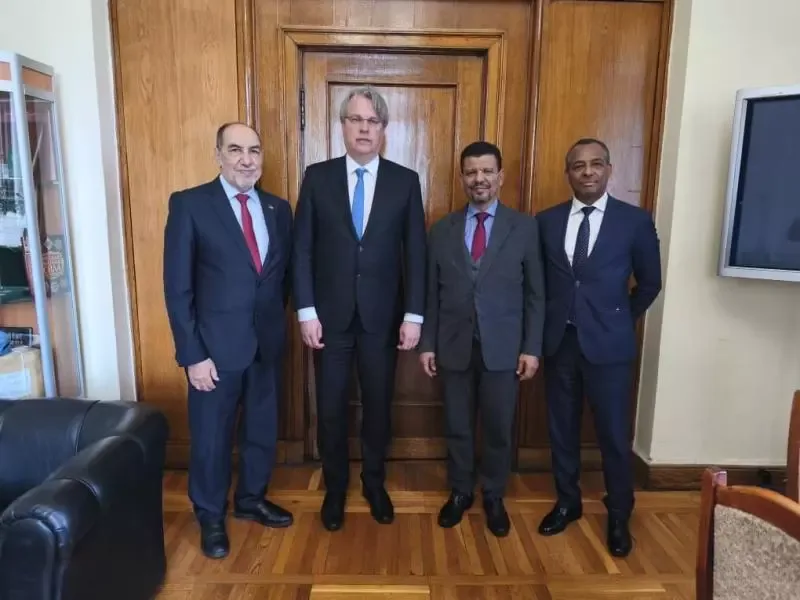
Deputy Foreign Minister Alexander Sergeevich Alimov with the Sahrawi delegation led by Mohamed Yeslem Beisat
Since the resumption of the armed struggle in 2020, direct Russian support for the Polisario has so far been limited to training non-commissioned officers and officers in military medicine.
At present, state-directed Russian propaganda in favour of the Sahrawi liberation struggle is increasing. There have already been similar campaigns in the Sahel states – shortly afterwards, these countries received extensive Russian military aid. The channel Rybar Africa has published several articles about a scenario set shortly after the extraordinary Russian veto against the US proposal in the UN Security Council: in it, Russia supplies the Polisario Front with the Geran-5 drone, dramatically shifting the balance of power on the battlefield in favour of the Polisario.
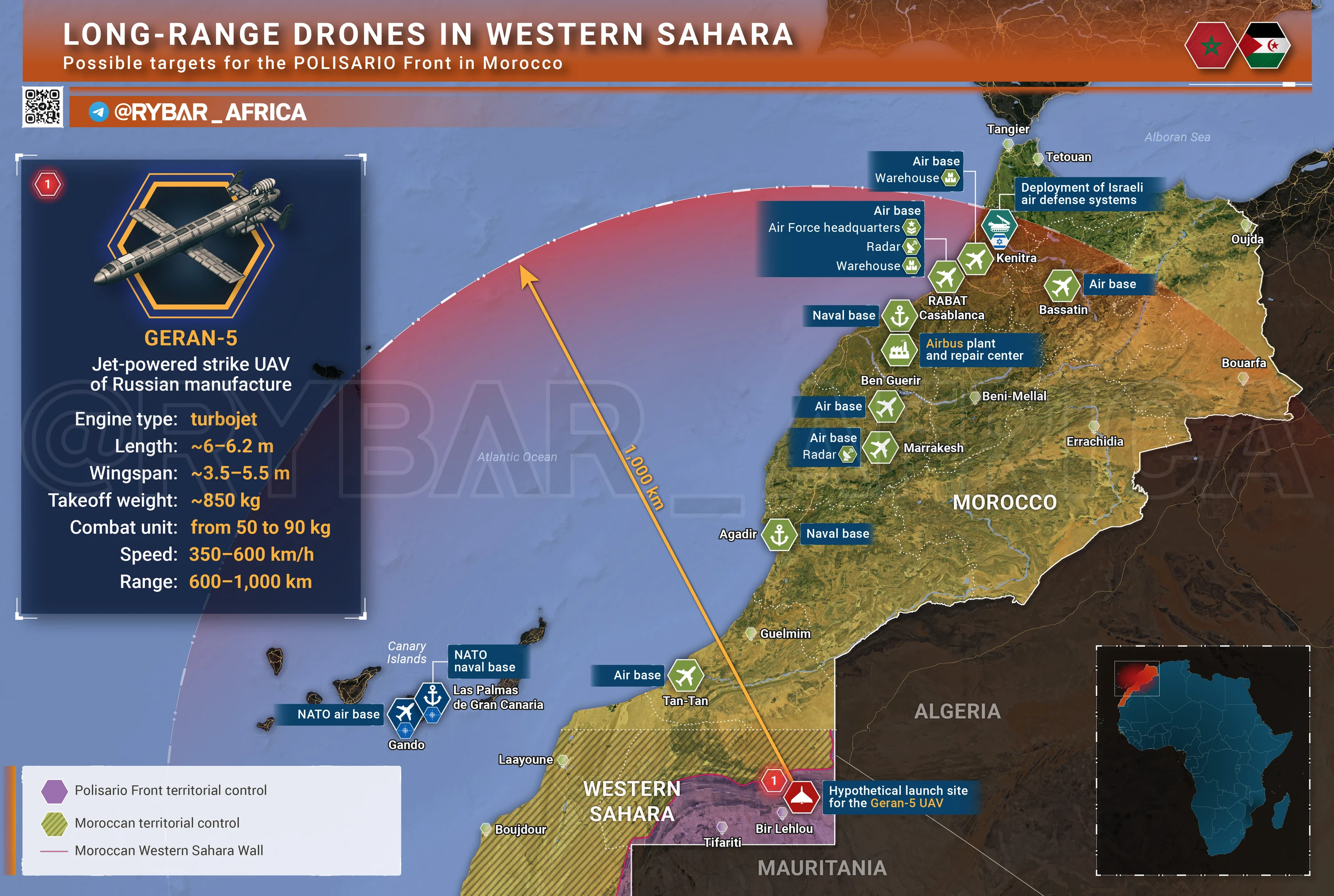
Who is behind Rybar Africa?
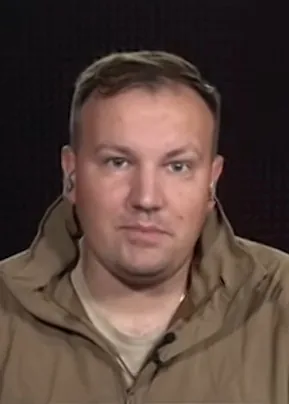
Rybar was founded by Mikhail Zvinchuk, who also runs the project. He was trained as a military interpreter for Arabic and English at the Military University of the Russian Ministry of Defence. He then served as commander of a reconnaissance group in the special forces (Spetsnaz) of the GRU military intelligence service. During the Russian operation in Syria, he worked in the press service of the Ministry of Defence.
Rybar Africa is part of a government-affiliated media project with several hundred staff, which is sanctioned by the EU and the US. The project’s media specialise in geopolitics and conflicts in Africa and the Middle East. The Telegram channel also reports daily on Israel’s war crimes in Gaza.
Is a door opening here?
Could this coverage be a door that is just waiting for the Polisario Front to take another step towards Russia? Many senior cadres of the Polisario Front have no political training. The few leaders who studied international relations or political science are largely stuck in a time when people believed the UN could bring about a democratic solution. The reality, however, is that MINURSO no longer exists. The adversary has scored one political success after another, while the political-military leadership of the Polisario stood by and did nothing.
The US, Spain, France, Germany, the United Kingdom and many other Western states have now sided with Morocco.
What is still keeping the Polisario Front from moving closer to Russia, China and Iran? The senior cadres fear Western sanctions and being put on the US terrorist list.
Yet the Polisario Front has never targeted civilians, hospitals or schools – even investigations by Western governments close to Morocco confirm this.
Nevertheless, two bills have been introduced in the US House of Representatives and the Senate – one Democratic and one Republican – that would designate the Polisario Front as a terrorist organisation.
The Polisario will end up on the terrorist list either way, and as a result Algeria will in any case be classified as a supporter of terrorism and sanctioned. That is why Algeria will neither end its decades-long friendship and cooperation with Russia, China and Iran nor drop the Polisario Front.
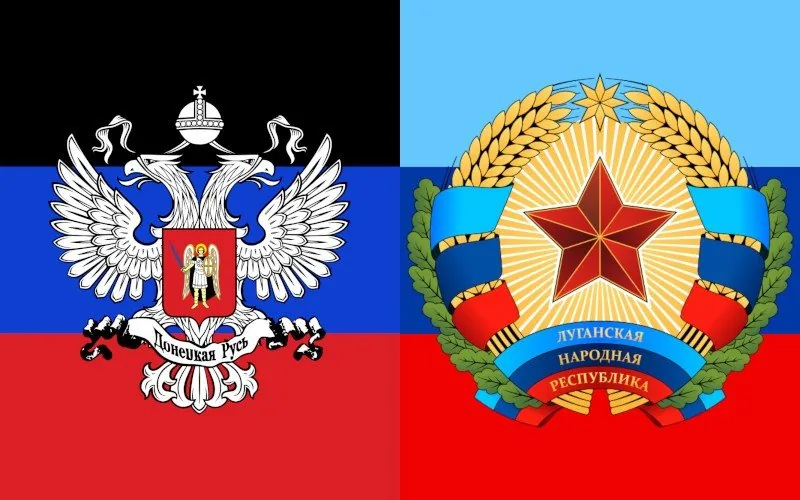
Why does the Polisario not recognise the LPR and the DPR and establish official diplomatic relations with them?
The abbreviations LPR and DPR stand for the Luhansk People’s Republic and the Donetsk People’s Republic – two territories in eastern Ukraine that broke away from the regime in Kyiv in 2014, after the anti-Russian coup, because of massacres of the Russian-speaking population. Russia regards both as independent states and has officially recognised them.
Why does the Polisario not move closer to Russia?
What it fears – being designated a terrorist organisation – will happen anyway. And its traditional allies, above all Algeria, already belong to the bloc of Russia, China and Iran. The time is ripe for a change of policy: away from the referendum and from waiting for the UN, towards a genuine national liberation struggle – and towards the traditional friends of oppressed peoples: Russia, China and Iran.